
Vedic Astrology 101: The Ancient Data Science of the Stars
Ajay Navgraha Astrology
2/11/20263 min read
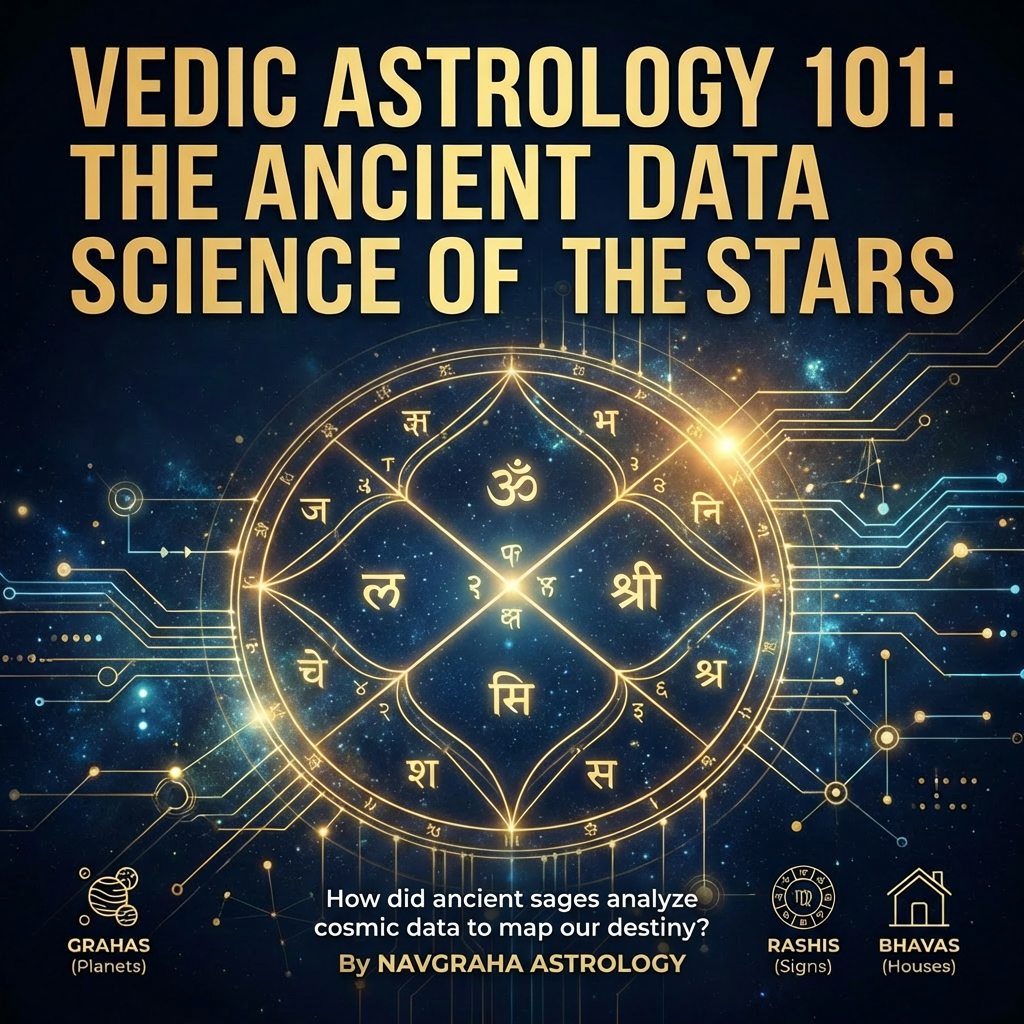
Vedic Astrology 101: The Ancient Data Science of the Stars
Have you ever looked up at the night sky and wondered about your place in the vast, cosmic dance? For thousands of years, humanity has sought to understand its connection to the heavens. In ancient India, this quest for knowledge gave birth to a profound and sophisticated system: Vedic Astrology, or as it is traditionally known, Jyotish (the "science of light").
But this isn't just about reading a daily horoscope. At its core, Vedic Astrology is a powerful tool for self-discovery, and in many ways, it was the original data science. Let's explore the fundamentals.
The Building Blocks of Your Cosmic Blueprint
Vedic Astrology operates on the principle of as above, so below. It suggests that the planetary patterns at the moment of your birth create a unique cosmic blueprint—your birth chart or Kundali. This chart is a map of your potential, tendencies, strengths, and challenges.
This map is built from three fundamental components:
The Grahas (The Planets): In Jyotish, there are nine primary "influencers" or Grahas. These aren't just balls of rock and gas; they are considered cosmic energies that shape our lives. They are the Sun, Moon, Mars, Mercury, Jupiter, Venus, Saturn, and the two lunar nodes, Rahu and Ketu. Each Graha governs specific aspects of our personality and life events.
The Rashis (The Zodiac Signs): The twelve zodiac signs (Aries, Taurus, etc.) form the backdrop or the field against which the planets operate. Think of a Rashi as the "flavor" or "quality" that a planet takes on when it is placed there. For example, the fiery planet Mars will express itself very differently in the watery sign of Cancer versus the earthy sign of Capricorn.
The Bhavas (The Houses): The birth chart is divided into 12 "houses" or Bhavas. Each house represents a specific area of your life, such as self and personality (1st house), wealth and family (2nd house), career (10th house), and relationships (7th house). The placement of planets in these houses indicates where their energy will be most active in your life.
Your birth chart is the unique combination of these three elements: which planet is in which sign and in which house.
The Ancient Sages: The First Data Scientists
This is where the fascinating link to data science comes in. The ancient sages, or Rishis, were not just mystics; they were meticulous observers and pattern-recognizers.
Imagine them, night after night, for centuries, documenting the movements of the planets and stars.
Data Collection: They gathered massive amounts of observational data on celestial positions.
Correlation Analysis: They then correlated this celestial data with events on Earth—from seasons and tides to human personalities, health, and major life events. They saw that when Jupiter was in a certain position, a particular type of event or energy prevailed.
Pattern Recognition & Model Building: Over thousands of years of observation, they identified recurring patterns. From these patterns, they built a complex and sophisticated predictive model—the system of Vedic Astrology. This "algorithm" explains how different planetary combinations influence human life.
They were, in essence, analyzing a cosmic dataset to understand and predict human experience. They didn't have supercomputers, but they had profound consciousness and generations of dedicated observation.
Your Birth Chart: A Personalized Data Report
When an astrologer analyzes your birth chart today, they are essentially running a personalized "data report" based on the principles discovered by the sages.
Your Input Data: Your exact birth date, time, and location.
The Algorithm: The timeless rules and principles of Jyotish.
The Output: Your unique birth chart, a detailed map of planetary placements.
The astrologer's job is to interpret this report, explaining how the different data points (planets) interact within the framework (signs and houses) to tell the story of your life. It provides insights into your "operating system," helping you understand why you are the way you are and how to best navigate the different phases of your life.
Vedic Astrology isn't about a fixed, unchangeable fate. Instead, it’s a tool for empowerment. By understanding your cosmic data, you gain self-awareness. It's like having a weather forecast for your life; you can't change the rain, but you can decide to carry an umbrella.
So, the next time you think of astrology, consider it through this lens: a profound, ancient data science designed to illuminate your path and help you live in greater harmony with the universe.
By Ajay Navgraha
Contact
Reach out for bookings or questions
Phone
Contact@Navgrahaastrology.com
+918264516399
© 2026. All rights reserved.